Ice dams on Boise roofs are more than a seasonal nuisance—they are a serious winter roofing threat that can lead to interior water damage, mold growth, insulation failure, and costly structural repairs. At Peak Roofing, we regularly help Treasure Valley homeowners navigate the aftermath of winter roof leaks caused by ice buildup along eaves and gutters.
Understanding why ice dams form, how to recognize early warning signs, and what safe removal methods look like can protect your home and reduce the likelihood of needing emergency roof repair in Boise. If you’ve searched for “ice dams roof” during a cold snap, you’re not alone. Boise’s freeze-thaw cycles create ideal conditions for ice dam formation, especially in homes with insulation gaps or ventilation issues. According to the National Weather Service, ice dams occur when “melted snow refreezes at the roof edge, preventing proper drainage.” When that drainage is blocked, water can back up beneath shingles and seep into your attic and walls. The result often shows up as ceiling stains, peeling paint, or even active leaks. By learning the science behind ice dams and taking preventive steps, homeowners can stay ahead of winter damage and avoid unexpected roof leak repair in Boise.
What Causes Ice Dams on Boise Roofs?
Ice dams form when uneven roof temperatures allow snow to melt and refreeze repeatedly. Boise winters often fluctuate between freezing nights and sunny afternoons, creating a cycle that accelerates this process. Warm air escaping from the living space into the attic raises the temperature of the roof deck. Snow resting above those warmer sections begins to melt, and the water flows downward toward the colder eaves. Because the roof edge remains below freezing, the melted water refreezes, gradually forming a ridge of ice. Over time, that ridge thickens and prevents additional melting snow from draining properly. According to the U.S. Department of Energy, inadequate attic insulation and air sealing are leading contributors to ice dam formation because they allow heat to escape into the attic space. When insulation levels are inconsistent or ventilation is blocked, temperature imbalances become more pronounced.
Several common factors increase the likelihood of ice dams on Boise homes:
- Poor attic insulation that allows interior heat to rise
- Inadequate ventilation is preventing cold airflow under the roof deck
- Air leaks around recessed lighting, plumbing vents, or attic hatches
- Clogged gutters that trap melting snow and ice
- Complex rooflines that create snow accumulation pockets
In my experience evaluating winter roof systems in cold-weather regions, many homeowners are unaware that ice dams often signal a deeper energy efficiency problem. The University of Idaho Extension emphasizes that balanced ridge-to-soffit ventilation helps maintain consistent roof temperatures and reduces uneven snowmelt. Without that balance, even a newer roof can experience repeated winter issues. Over time, trapped water beneath shingles can deteriorate underlayment and decking materials, increasing the need for roof repair in Boise.
Warning Signs of Ice Dams and Roof Leaks
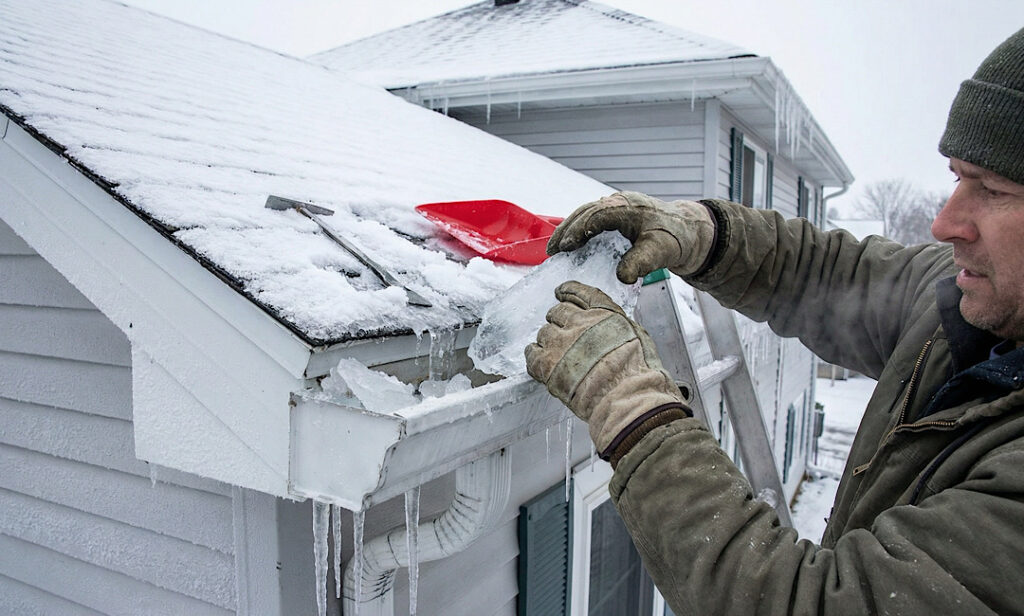
Ice dams are often visible from the ground, but interior warning signs may appear first. Large icicles hanging from gutters are not simply decorative winter features—they frequently indicate trapped water at the roof edge. While icicles alone do not confirm active damage, they often accompany ice buildup that restricts drainage. Inside the home, early symptoms may include ceiling discoloration, damp insulation, or peeling paint near exterior walls. The Environmental Protection Agency (EPA) notes that mold can begin forming within 24–48 hours of moisture exposure, making early detection critical. Many of these symptoms mirror the 5 signs of storm damage that indicate a roof may already be compromised.
Homeowners should watch for these warning signs:
- Thick ridges of ice along eaves and gutters
- Oversized icicles are forming repeatedly in the same areas
- Water stains on ceilings or upper walls
- Damp attic insulation or frost accumulation on roof nails
- Musty odors in attic spaces during winter
I have seen cases where homeowners only noticed minor staining months after winter ended, unaware that repeated freeze-thaw cycles had allowed water intrusion all season. The National Roofing Contractors Association (NRCA) identifies flashing joints and shingle seams as particularly vulnerable when backed-up water remains in contact for extended periods. If you observe active dripping during a thaw, immediate roof leak repair in Boise may be necessary to prevent structural deterioration.
Safe Removal of Ice Dams
Removing ice dams improperly can cause more harm than the ice itself. Climbing onto an icy roof presents serious safety risks, and mechanical chipping can damage shingles, underlayment, and flashing. The American Red Cross advises homeowners to prioritize safety and avoid hazardous winter roof access. Safe removal strategies focus on controlled melting rather than forceful impact. Professional roofing contractors may use steam removal methods that melt ice without damaging roofing materials. Steam systems safely break down ice buildup while preserving shingle integrity.
Temporary mitigation options homeowners sometimes use include:
- Placing calcium chloride-filled socks across ice ridges to create drainage channels
- Clearing snow from the lower roof edge using a roof rake from the ground
- Improving interior airflow to reduce attic heat buildup
It is important to avoid rock salt, which can corrode gutters and damage roofing components. In my professional observations, steam removal remains the most effective and least invasive approach when ice dams are severe. However, safe removal addresses symptoms, not root causes. Without correcting insulation or ventilation deficiencies, ice dams often return the following winter. Consulting a qualified roofing contractor in Boise, ID, ensures both removal and prevention are addressed comprehensively.
Preventing Ice Dams and Costly Repairs
Prevention is the most reliable solution for protecting your home from recurring winter roof damage. The U.S. Department of Energy recommends ensuring attic insulation meets current R-value guidelines for your climate zone. Proper air sealing around attic penetrations helps prevent heat transfer from living areas. Balanced ventilation systems—typically involving soffit and ridge vents—allow cold air to circulate beneath the roof deck, keeping surface temperatures consistent. Clogged gutters should be cleared before winter to allow proper drainage. Clogged gutters should be cleared before winter to allow proper drainage. Scheduling a professional residential roof inspection before peak winter conditions can identify vulnerabilities early.
Key preventative measures include:
- Upgrading attic insulation to the recommended R-values
- Sealing air leaks in ceilings and attic floors
- Installing or improving ridge-to-soffit ventilation
- Scheduling annual winter roof inspections
- Removing excess snow safely after heavy accumulation
The Centers for Disease Control and Prevention (CDC) notes that heavy snow loads increase structural stress, further emphasizing the importance of safe snow management. In Boise’s variable winter climate, proactive maintenance often costs significantly less than repeated roof repair due to water intrusion. Addressing energy efficiency improvements not only reduces ice dam risk but can also lower heating costs and improve indoor comfort.
If you notice ice buildup forming along your roofline or early signs of moisture inside your home, taking prompt action can prevent significant damage. In some cases, repeated winter deterioration may indicate it’s time to evaluate when to replace your roof.
Peak Roofing provides detailed winter roof assessments designed to identify insulation gaps, ventilation deficiencies, and vulnerable flashing areas. Addressing ice dams early reduces the likelihood of emergency roof leak repair in Boise and protects your home’s structural integrity throughout the cold season. Contact our team today to schedule an inspection.
Frequently Asked Questions
Are ice dams always a sign of poor insulation?
Not always, but insulation gaps and air leaks are among the most common contributing factors.
Can ice dams damage a newer roof?
Yes. Even new shingles can allow water intrusion if backed-up melting snow remains trapped at the eaves.
Is steam removal safe for shingles?
Yes. Professional steam removal is widely considered the safest method because it melts ice without mechanical damage.
How quickly should roof leaks from ice dams be addressed?
Immediately. Delays can lead to mold growth and structural deterioration within days.
Do ice dams require full roof replacement?
Typically no. Most cases require targeted roof repair in Boise and ventilation improvements rather than full replacement.