
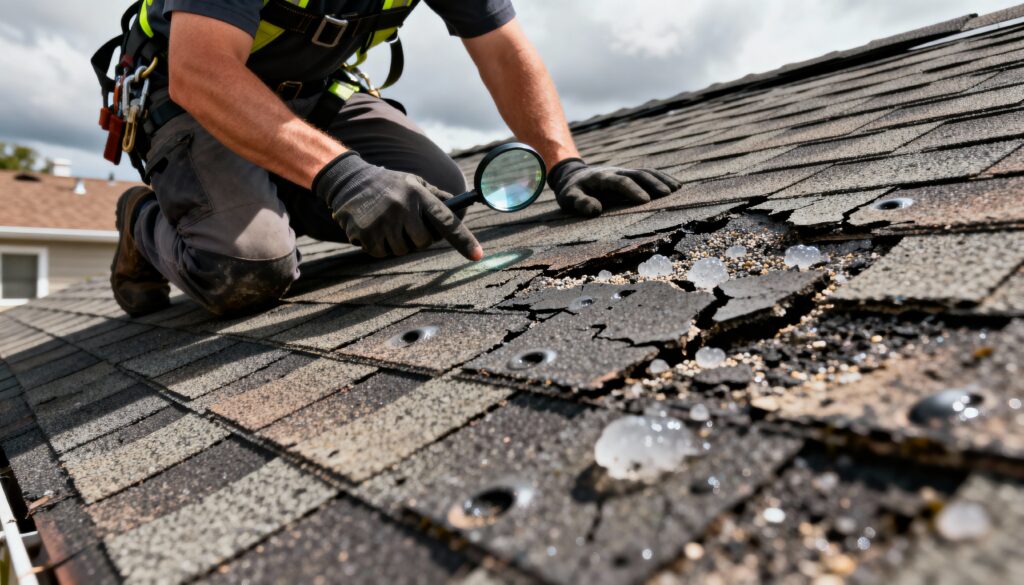
Boise spring and summer storms can develop quickly, producing bursts of hail that last only minutes but leave lasting damage behind. While not every hailstorm results in severe roofing problems, even moderate impacts can weaken shingles and shorten the lifespan of your roof. The challenge for many homeowners is knowing what hail damage actually looks like—and when it warrants a professional storm damage roof inspection in Boise.
At Peak Roofing, we regularly inspect roofs after Treasure Valley hail events and find that early detection makes a significant difference. Small impact marks, minor granule loss, or dented flashing may not cause immediate leaks, but they can compromise your roof’s ability to shed water effectively over time. Acting early empowers you to protect your home before damage worsens or a roof insurance claim in Boise becomes more complicated.
Understanding the signs of hail damage on your Boise roof gives you clarity and confidence in the aftermath of a storm.
Why Hail Is Harder on Roofs Than It Looks
Hailstones vary in size, density, and velocity. Even hail that appears “small” from the ground can strike shingles with significant force. According to the Insurance Institute for Business & Home Safety (IBHS), hail impact can fracture the internal mat of asphalt shingles without always creating obvious surface tears. That internal bruising weakens the shingle’s structure and accelerates deterioration.
Boise’s seasonal storms often bring short but intense hail bursts, especially in late spring. When combined with wind, hail can hit roofing materials at angles that increase impact force. Over time, those impacts may lead to:
- Granule loss that exposes asphalt to UV rays
- Micro-fractures that allow moisture intrusion
- Reduced wind resistance
- Shortened shingle lifespan
Because damage is not always immediately visible, homeowners should conduct careful visual checks following any hail-producing storm.
Exterior Signs of Hail Damage on Boise Roofs
After a hailstorm, begin your inspection safely from the ground. Avoid climbing onto your roof, especially when surfaces may still be wet or unstable.
Common exterior signs include:
- Dented gutters or downspouts
- Dings in metal flashing or vent caps
- Granule accumulation near downspout exits
- Dark or irregular patches on shingles
- Shingle tabs that appear cracked or split
Dented gutters are often the first visible clue. Metal components show impact marks more clearly than shingles, making them helpful indicators of hail intensity. If you notice consistent dents along gutter lines, your shingles may have absorbed similar impact energy.
Granule loss is another key warning sign. Asphalt shingles rely on granules to protect the underlying material from ultraviolet exposure. When granules are knocked loose, the exposed areas may appear darker or shiny. Over time, these spots become vulnerable to cracking and water infiltration.
Subtle Shingle Bruising & Hidden Damage
Some hail damage is not obvious from the ground. Shingle bruising occurs when hail impacts displace granules and compress the asphalt layer beneath. These bruises may feel soft when gently pressed but are difficult to see without close inspection.
Professional storm damage roof inspection in Boise often identifies:
- Circular impact marks about the size of a quarter
- Soft spots indicating mat fracture
- Random distribution patterns consistent with hail impact
- Damage concentrated on one slope of the roof
In my experience reviewing post-hail assessments, many homeowners are surprised that what looked like minor surface wear was actually structural shingle impairment. Early identification prevents long-term issues that could lead to leaks months later.
Interior Clues That Hail Damage Has Progressed
While hail damage typically begins externally, it can evolve into interior symptoms if left untreated.
Watch for:
- New ceiling stains after rain
- Damp attic insulation
- Dripping around vents or skylights
- Musty odors in upper rooms
The Environmental Protection Agency (EPA) states that mold can begin developing within 24–48 hours of moisture exposure. Even small compromised areas may allow moisture penetration over time.
If interior signs appear, schedule a storm damage roof inspection in Boise promptly to limit structural risk.
When to Schedule a Professional Roof Inspection in Boise
Not every hail event requires immediate insurance involvement. However, certain circumstances justify professional evaluation:
- Hailstones larger than 1 inch in diameter
- Visible metal denting across multiple exterior components
- Neighboring homes filing roof insurance claims in Boise
- Roofs older than 15–20 years
A professional inspection provides documentation that protects you whether you file a claim or not. Reputable contractors will provide photographs and a detailed explanation of findings.
According to the Insurance Information Institute, prompt documentation strengthens roof insurance claim processes and reduces disputes. Waiting too long may complicate verification of storm-related damage.
Understanding Cosmetic vs. Functional Damage
Insurance carriers often distinguish between cosmetic and functional damage. Cosmetic damage may affect appearance but not water-shedding capability. Functional damage compromises roof performance.
Functional hail damage may include:
- Fractured shingle mats
- Significant granule displacement
- Compromised flashing integrity
- Sealant breakage around penetrations
Understanding this distinction empowers homeowners during claim discussions. A qualified roofing professional can help determine whether your roof’s structural integrity has been compromised.
Avoiding Common Post-Storm Mistakes
After a hailstorm, avoid rushed decisions.
Do not:
- Sign contracts with contractors who pressure immediate claims
- Allow unverified “storm chasers” to inspect without credentials
- Attempt DIY shingle repairs
- Ignore minor damage assuming it will not worsen
Roof insurance claim Boise processes require documentation and clarity. Choosing a trusted local contractor ensures guidance without pressure.
Protecting Your Roof After Hail in Boise
Preventative action strengthens resilience for future storms.
Consider:
- Annual roof inspections
- Replacing aging shingles proactively
- Upgrading to impact-resistant shingles
- Maintaining clear gutters
- Ensuring flashing is securely fastened
The National Roofing Contractors Association emphasizes regular inspections as one of the most effective ways to extend roof lifespan and detect damage early.
Boise hailstorms may be brief, but their impact can linger for years if unnoticed. By understanding the visible and subtle signs of hail damage roof issues in Boise, you position yourself to act confidently and avoid costly long-term repairs. Early inspection, careful documentation, and professional evaluation empower homeowners to protect both their property and their peace of mind.
If you suspect hail damage after a recent storm, schedule a professional storm damage roof inspection in Boise. A clear assessment today can prevent expensive surprises tomorrow.
FAQs
Within 24–72 hours, once conditions are safe.
Yes. Minor bruising may not leak immediately but can deteriorate over time.
Coverage depends on your policy and whether functional damage is documented.
They often suggest significant hail impact that may also affect shingles.
Not necessarily. Replacement depends on the severity and extent of functional damage.