How Ridge Vents and Soffit Ventilation Help Cool a Hot Boise Attic

Boise summers are relentless on rooftops. When afternoon temperatures climb into the triple digits, and the sun beats down on dark asphalt shingles for hours at a time, the attic beneath that roof can reach temperatures well above one hundred fifty degrees Fahrenheit without adequate ventilation in place. When Peak Roofing inspects homes across the Treasure Valley during summer months, an overheated, poorly ventilated attic is one of the most consistent findings, and it is one of the most consequential because the damage it causes builds quietly over the years before homeowners realize what has been happening above their ceilings.

This guide explains how ridge vents and soffit ventilation work together to manage attic heat, why balanced ventilation matters for both cooling efficiency and roof longevity, and what Boise homeowners should know about their attic ventilation before another summer passes without addressing it.

Why Attic Heat Is a Serious Problem in Boise

The Treasure Valley’s combination of intense summer sun, low humidity, and extended periods of ninety-plus-degree temperatures creates attic heat conditions that are more demanding than what most national roofing guidelines are calibrated for. An attic that reaches one hundred fifty degrees or higher is not simply uncomfortable. It is actively degrading the components of the roof system above it and the living space below it simultaneously.

From above, extreme attic heat accelerates the degradation of asphalt shingles from the underside. Shingles are designed to resist heat from the exterior sun exposure, but the combination of exterior UV and heat load alongside extreme heat radiating upward from an overheated attic deck shortens shingle lifespan significantly relative to what the manufacturer’s warranty assumptions are based on. A shingle warranted for thirty years under normal conditions may perform closer to twenty years when the attic beneath it regularly reaches temperatures that the manufacturer’s testing did not anticipate.

From below, an overheated attic drives radiant heat downward into the living space, increasing the cooling load on the home’s HVAC system and producing the upstairs rooms that are noticeably warmer than the rest of the house that Boise homeowners commonly describe. An attic that is properly ventilated and therefore significantly cooler transfers meaningfully less heat into the living space, which reduces cooling costs and improves comfort throughout the home’s upper level during the peak summer months.

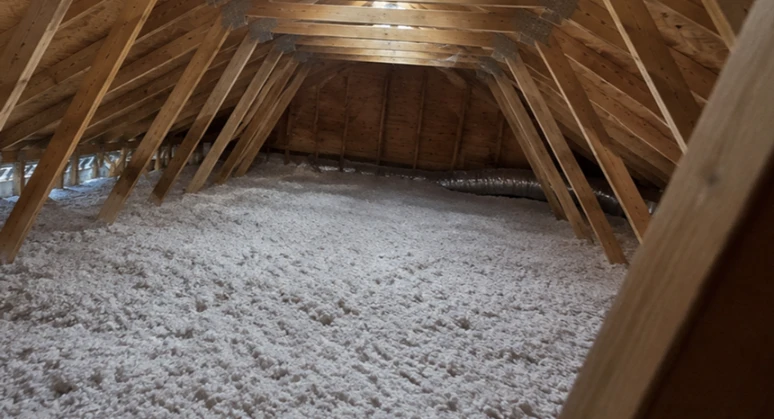
Moisture damage is the third consequence of inadequate attic ventilation that is less immediately visible than shingle degradation or cooling inefficiency but ultimately the most structurally serious. Even in Boise’s dry climate, moisture accumulates in attic spaces through the normal moisture load of the household below, and an unventilated or under-ventilated attic traps that moisture in ways that promote wood rot, mold growth, and insulation degradation over time. Optimizing attic insulation and ventilation before Idaho winters covers the moisture management dimension of attic ventilation that complements the heat management focus of this article.

How Ridge Vents Work

A ridge vent is a continuous ventilation component installed along the peak of the roof, the ridge line where the two roof planes meet, that allows hot air to escape from the attic along the full length of the ridge rather than only at isolated point locations.

The physics of ridge vent ventilation is straightforward. Hot air rises, and in an attic space the hottest air concentrates at the highest point, which is the ridge. A continuous ridge vent that runs the full length of the roof peak allows this concentrated hot air to exit the attic passively as it rises, creating a consistent outflow that draws cooler replacement air in from below. The effectiveness of this passive outflow depends directly on how much cool replacement air is available to enter the attic from the lower ventilation points, which is where soffit ventilation becomes critical.

Ridge vents are available in several configurations that vary in their airflow capacity, their weather resistance, and their aesthetic integration with the finished roof. Low-profile ridge vents that are covered by cap shingles are the most common residential application because they are virtually invisible from the street while providing the continuous ventilation opening that the ridge line needs. External baffle designs that redirect wind across the vent opening can enhance the passive ventilation effect by creating a slight negative pressure at the vent opening that draws additional airflow from the attic.

The common mistake in ridge vent installation is treating it as a standalone solution rather than as one half of a balanced ventilation system. A ridge vent without adequate soffit ventilation to supply replacement air creates a condition where the ridge vent is attempting to exhaust air from an attic that cannot replace the exhausted air fast enough, which dramatically reduces the ventilation effectiveness and can in some configurations actually draw outside air in through the ridge rather than exhausting interior air out. Ridge vents only work as designed when they are part of a system that includes adequate intake ventilation at the eaves.

How Soffit Ventilation Works

Soffit vents are intake ventilation components installed in the soffit, the horizontal board that covers the underside of the roof overhang where it meets the exterior wall of the house. They allow outside air to enter the attic space at the lowest point of the roof assembly, providing the cool air intake that the ridge vent system requires to function effectively.

The positioning of soffit vents at the lowest point of the attic space is essential to the balanced ventilation system’s function. Cool outside air enters through the soffit vents at the eave, moves upward through the attic as it absorbs heat, and exits through the ridge vent at the peak. This continuous airflow from low intake to high exhaust is what keeps the attic temperature close to outside ambient temperature, rather than allowing it to build to the extreme levels that an unventilated or under-ventilated attic reaches.

Soffit vents are available as individual circular or rectangular vent units installed at intervals along the soffit, or as continuous perforated soffit panels that provide intake ventilation across the full length of the eave. Continuous soffit ventilation provides more uniform airflow distribution than spot vents and is generally preferred when the soffit construction allows for it, because it eliminates the dead zones between individual vent units where air movement is minimal.

The most common soffit ventilation problem that Peak Roofing encounters during inspections is blocked soffits where insulation from the attic floor has migrated to cover the vent openings, completely eliminating the intake airflow that the ventilation system depends on. Insulation baffles or rafter channels installed between the rafters above the soffit maintain the airflow path from the soffit vent into the open attic space even when the attic floor is heavily insulated, and their installation is a standard component of any quality attic ventilation upgrade. Residential roof inspection services in Boise include attic ventilation assessment as a component of the full roof evaluation.

The Balanced Ventilation Principle

The concept that makes ridge and soffit ventilation effective is balance, specifically the balance between the intake ventilation area at the soffits and the exhaust ventilation area at the ridge. Industry standards established by the International Residential Code and supported by roofing manufacturer recommendations call for a minimum of one square foot of net free ventilation area for every one hundred fifty square feet of attic floor area, split roughly equally between intake and exhaust.

When intake and exhaust ventilation are balanced, the system operates as designed, with continuous passive airflow moving from the soffit intakes to the ridge exhaust driven by thermal buoyancy. When exhaust ventilation significantly exceeds intake ventilation, the system creates a negative pressure condition that can draw outside air through unintended pathways, including roofing materials and wall assemblies, potentially introducing moisture. When intake ventilation significantly exceeds exhaust ventilation, the attic can develop positive pressure that forces humid air into wall cavities and reduces the effectiveness of the exhaust ventilation.

Boise homes built before the mid-1990s frequently have inadequate ventilation by current standards because the ventilation requirements in the building codes of earlier construction eras were less stringent than today’s standards. Homeowners in older Treasure Valley homes should not assume that the ventilation installed during original construction is adequate for the home’s current insulation levels and for the performance standards that modern roofing materials require. Why summer is the best time for a residential roof inspection in Boise covers why summer is the ideal time to assess ventilation conditions when the heat load on the attic is at its maximum.

Common Ventilation Problems Peak Roofing Finds in Boise Homes

Professional roof inspections across the Treasure Valley reveal consistent patterns of ventilation deficiency that homeowners are frequently unaware of until the consequences in shingle degradation, cooling costs, or moisture damage become visible.

Blocked soffit vents are the most common finding and the most immediately correctable. Insulation compressed against vent openings, paint overspray from exterior painting projects that has partially or fully sealed vent perforations, and debris accumulation in the soffit area all reduce or eliminate intake airflow. The fix is straightforward but requires someone to access the attic and verify that each soffit vent opening has a clear airflow path from the exterior into the attic space.

Inadequate ridge vent length is a finding in homes where ridge vents were installed but only over a portion of the ridge length rather than the full ridge line. A partial ridge vent that covers sixty percent of the ridge provides significantly less than sixty percent of the ventilation effectiveness of a full-length installation because the portions of the attic not covered by the ridge vent have no nearby exhaust point for the hot air that accumulates there.

Mixing of exhaust ventilation types is a specific installation error that occurs when both ridge vents and other exhaust vent types, such as box vents or power ventilators, are installed on the same roof. When ridge vents and lower exhaust vents coexist on the same roof, the ridge vent can draw air from the lower exhaust vents rather than from the soffit intakes, short-circuiting the ventilation system and allowing the lower portions of the attic to remain unventilated. Quality roofing practice uses a single exhaust ventilation type consistently across the full roof assembly. Extending your roof’s lifespan with a summer to fall roofing checklist covers additional roof maintenance practices that complement proper ventilation for long-term roof performance.

Ventilation and Shingle Warranties

Most major shingle manufacturers include ventilation requirements in their warranty terms, and shingle warranties can be voided by inadequate attic ventilation that can be shown to have contributed to premature shingle failure. This warranty consideration is one that most homeowners are unaware of until they attempt to make a warranty claim for premature shingle aging and discover that the manufacturer’s investigation of the claim identifies inadequate ventilation as a contributing factor.

Owens Corning, GAF, and CertainTeed, which are the primary shingle brands installed by quality roofing contractors in the Boise market, all have ventilation requirements specified in their warranty documentation. These requirements are consistent with the International Residential Code minimums but include specific provisions about the type and installation of ventilation components that must be met for the full warranty term to be valid. A new roof installation that does not include a ventilation assessment and upgrade, where necessary, is an installation that may leave the homeowner with a warranty that is less complete than they believe.

Frequently Asked Questions About Ridge Vents and Soffit Ventilation in Boise

How do I know if my Boise home has adequate attic ventilation?

The most reliable way to assess your attic ventilation is a professional inspection that evaluates the net free ventilation area of both your intake and exhaust ventilation components and compares it to the requirements for your attic’s square footage. Signs that may indicate inadequate ventilation include upstairs rooms that are noticeably warmer than the rest of the home during summer, shingles that are curling or showing premature aging, ice dams forming at the eaves in winter despite Boise’s relatively mild winters, and visible moisture staining or mold on the attic sheathing when the attic is accessed. None of these signs is definitive on its own, but any combination of them warrants a professional ventilation assessment.

Can I add soffit vents to an existing home without a full roof replacement?

Yes. Soffit ventilation can typically be added or improved without disturbing the roof covering above. The work involves cutting or enlarging vent openings in the existing soffit material and installing vent units or replacing solid soffit panels with perforated ventilating panels. The work is completed from below or from a ladder at the eave and does not require accessing the roof surface. The addition of insulation baffles above the new vent openings to ensure clear airflow into the attic may require brief attic access but is not a major construction undertaking. A roofing or ventilation contractor can assess what soffit improvements are feasible for your specific home’s construction.

Do power attic ventilators work better than passive ridge and soffit ventilation?

Power attic ventilators, which use an electrically powered fan to actively exhaust attic air, can move more air than passive ventilation under certain conditions, but they introduce problems that passive systems do not. Power ventilators can depressurize the attic to the point where they draw conditioned air from the living space through ceiling penetrations rather than outside air from the soffit vents, which increases rather than decreases cooling costs. They require electrical connections and have mechanical components that fail over time. Most roofing and building science professionals recommend properly designed passive ridge and soffit ventilation over powered ventilation for residential applications because the passive system is lower maintenance, avoids the conditioned air loss problem, and provides adequate ventilation when properly sized and balanced.

How much does it cost to improve attic ventilation in a Boise home?

Ventilation improvement costs vary based on the specific improvements needed and the size of the home. Adding or clearing soffit vents and installing insulation baffles is typically a lower-cost improvement that many homeowners can address with professional guidance. Replacing inadequate ridge ventilation with a full-length continuous ridge vent is most cost-effectively done in conjunction with a roof replacement, when the ridge cap is already removed and the installation adds minimal incremental cost to the project. Roof replacement cost in Boise, a realistic 2026 pricing guide covers the cost factors that affect roof replacement pricing, including ventilation upgrades.

Will better attic ventilation noticeably reduce my cooling bills in Boise?

The cooling cost impact of improved attic ventilation varies based on the home’s insulation levels, the severity of the existing ventilation deficiency, and the home’s construction. Homes with inadequate ventilation and minimal attic insulation see the most significant cooling cost improvement from ventilation upgrades because the heat transfer from the overheated attic into the living space is the dominant factor in their cooling load. Homes with adequate insulation but poor ventilation see more modest but still meaningful cooling cost improvements. Studies of attic ventilation improvement in hot climate zones consistently show measurable reductions in cooling energy use, with improvements typically ranging from five to fifteen percent, depending on the specific conditions.

Should I be concerned about ventilation if my roof is being replaced?

Absolutely. A roof replacement is the ideal time to assess and upgrade attic ventilation because the ridge cap and potentially other roof components are already being disturbed, making the addition of a full-length ridge vent a minimal incremental cost relative to doing it as a standalone project. Any reputable Boise roofing contractor should include an attic ventilation assessment as part of the roof replacement planning process and should recommend specific improvements where the existing ventilation is inadequate. A contractor who completes a roof replacement without addressing inadequate ventilation is doing the homeowner a disservice because the new roof’s performance and warranty may be compromised by the ventilation conditions that were not addressed. Contact Peak Roofing to schedule a ventilation assessment for your Boise home.

Keep Your Attic Cool and Your Roof Protected

Proper ridge and soffit ventilation is one of the most impactful investments a Boise homeowner can make for both summer comfort and long-term roof performance. Call Peak Roofing at 208.724.9315 or request a roof inspection online to get a professional assessment of your attic ventilation before another Boise summer takes its toll.

Get in Touch!

Accessibility Toolbar