SAVE UP TO $1,000 ON A FULL ROOF REPLACEMENT

UP TO $1,000 OFF YOUR NEW ROOF

Roofing Company in Nampa & the Treasure Valley

Skylight Repair in |the Treasure Valley|

Curious what a new roof costs? You can find out right now. A leaking skylight is almost never the glass. It’s the flashing around it, and that’s a fixable problem.
LET’S START WITH YOUR HOME
WHAT CAN WE HELP WITH?
Takes less than a minute. No pressure, no obligation—just a clear next step.
Customer Info
Who is this for?
Only used to confirm your request.
Customer Info
Your email
Only used to confirm your request.
Customer Info
Your phone or mobile number
Only used to confirm your request.
Visit Details
Where should the team go?
Final Note
Anything we should know?
Loading Form

A Roofing Problem,
|Not a Window Problem|

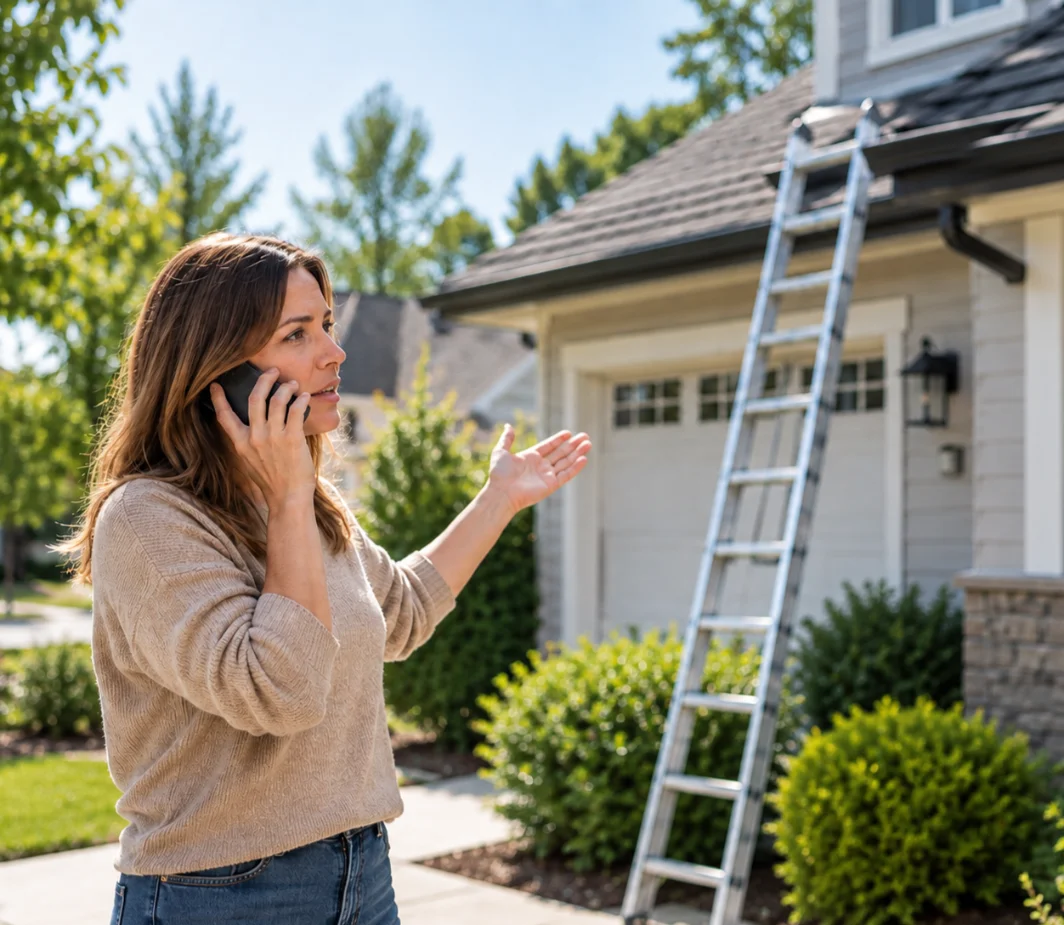
Most people call about a skylight after they’ve watched a stain spread on the ceiling around it for a season or two, hoping it would stop on its own.


It usually doesn’t, and it usually isn’t the skylight itself. Peak Roofing repairs skylight flashing and the seals around it as part of the roof, because that’s what the problem almost always is.


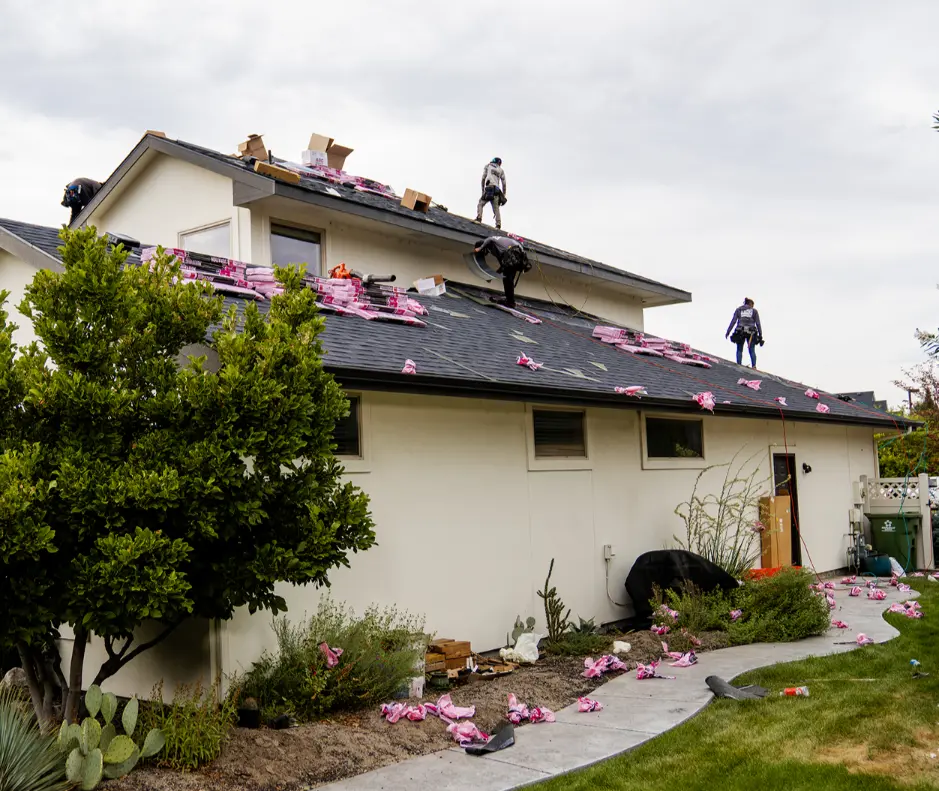
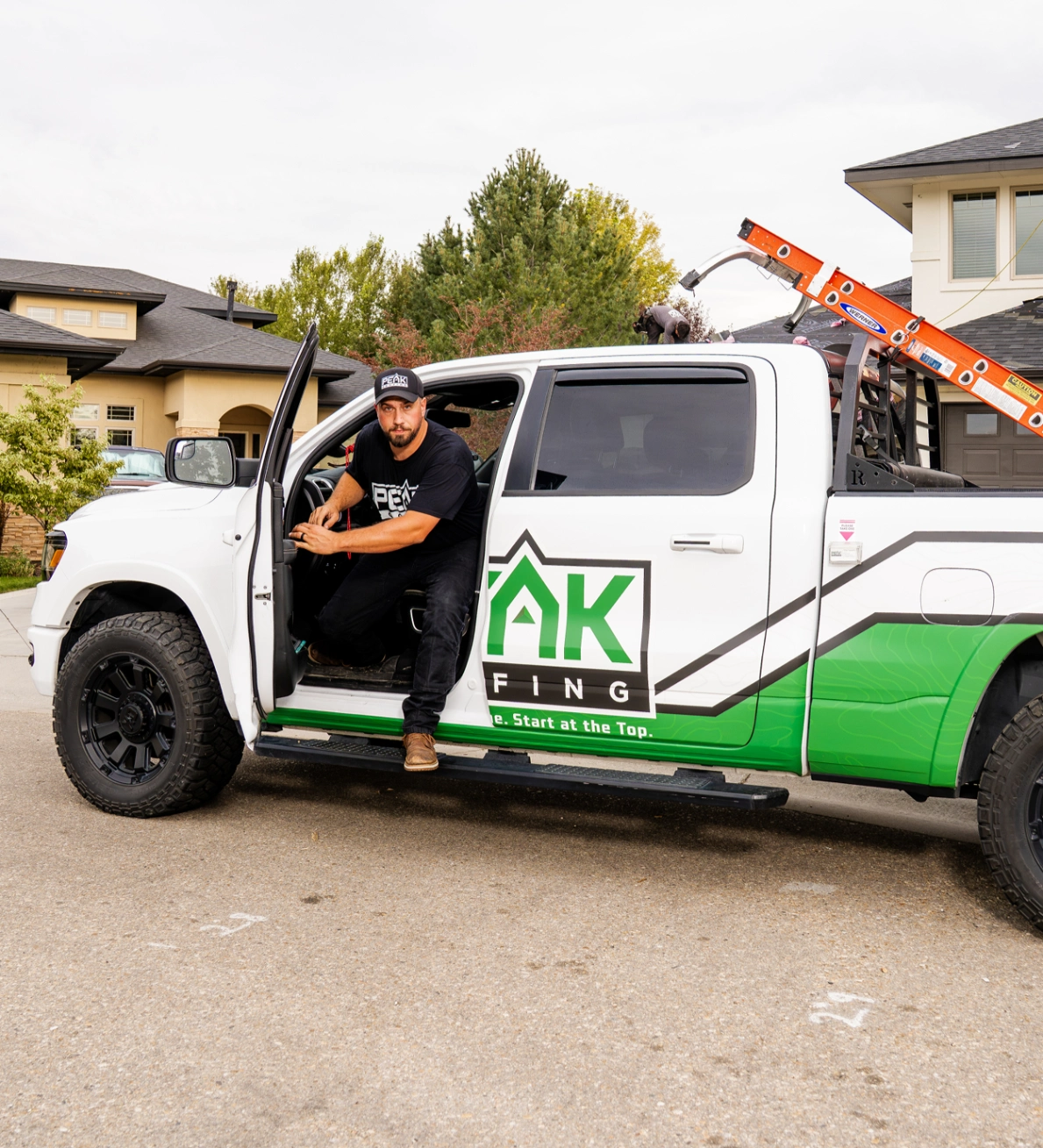
We’re owner-operated and work throughout Ada and Canyon County. Peak Roofing was already a trusted name in the valley when Mike took it over. He brought more than 10 years of hands-on experience with him. Read our story

Why Skylights Leak, and |Why It's Rarely the Glass|

A skylight is a hole cut in your roof. Everything holding water out of it happens at the edges.
Flashing wraps the skylight and ties into the shingle courses above and below it. It works by layering. Every piece has to overlap the right way. When it fails, water gets under it and travels.
Plenty of skylights have had a bead of caulk run around them at some point. Sealant degrades under sun, and caulk over a flashing problem buys a season at most. Visible sealant around your skylight usually means the flashing underneath still needs attention.
Water gets in at the top of the skylight, runs down the outside of the frame, and comes through the ceiling at a corner. Which is why the stain rarely sits directly under the entry point.
In this valley, UV and thermal cycling age sealant and flashing faster than rain ever will. Something that lasted fifteen years in a wetter, cloudier climate ages differently on a high desert roof.

What |We Repair|

Head, sill, and step flashing tied properly back into the shingle courses. This is the fix for most skylight leaks.
Where the seal at the curb or between flashing components has failed but the flashing itself is sound.
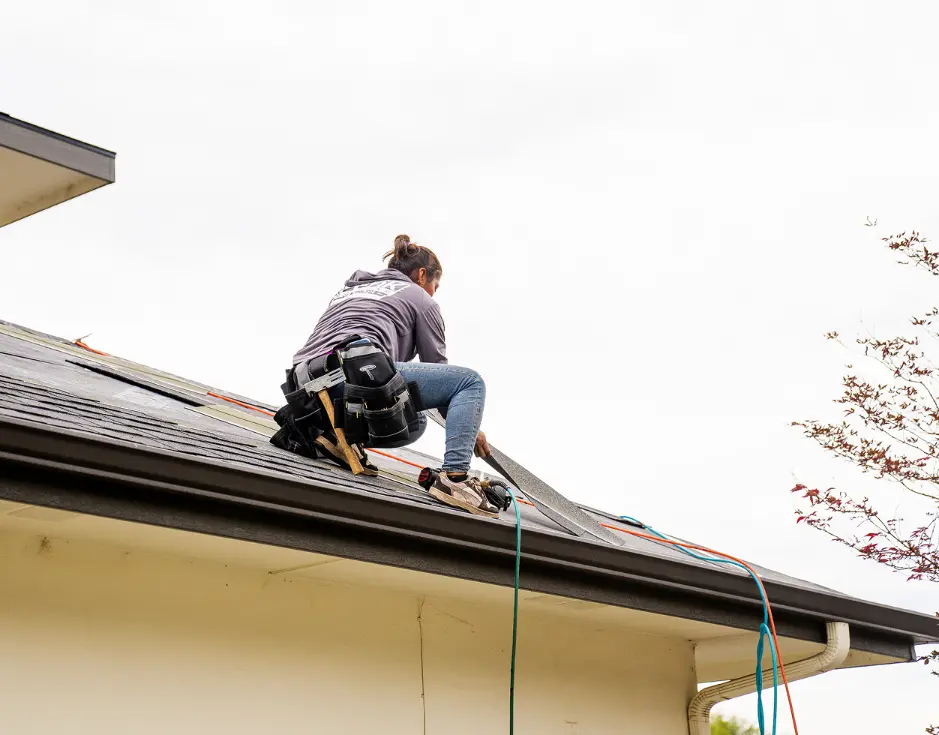
Skylight work almost always means lifting and resetting courses nearby. Those go back correctly, sealed, rather than being face-nailed to save time.

Curb-Mounted or Deck-Mounted, |and Why It Matters|

Which one you have changes the repair.
The skylight sits on a built-up wooden frame that rises above the roof deck. Flashing wraps the curb. These are common on older homes and generally straightforward to reflash.
The unit attaches directly to the deck with a lower profile and an integrated flashing kit made for that model. Repairs need to respect how that kit was designed to work, and mixing generic flashing into it is how leaks start again.
We’ll tell you which one you have and what that means for the fix, rather than quoting a generic skylight repair.

Is It a Leak,
|or Is It Condensation?|

This is worth checking before you call anyone, because in this climate it’s a genuine possibility.


Skylight glass is the coldest surface in the room on a winter night. This valley runs well over a hundred nights a year at or below freezing, and heated indoor air carries moisture. That moisture condenses on cold glass and runs down onto the frame and the ceiling, which looks exactly like a leak.

Condensation shows up in cold weather, not during rain. It sits on the glass and the frame instead of spreading as a stain in the drywall. It’s usually worse in kitchens and bathrooms, where the air holds more moisture.
Better attic and room ventilation, running an exhaust fan, and lowering indoor humidity in winter. It’s an air problem rather than a roof problem, and re-flashing a skylight won’t touch it.
If you’re not sure which one you have, we’ll come look and tell you honestly. Sometimes the answer is that you don’t need a roofer.


When Repair
|Isn't the Answer|

Some skylights are past reflashing.


If the seal between the glass panes has failed, you’ll see permanent fogging or moisture trapped inside the unit, and no amount of flashing work changes that. Cracked glazing, a warped or rotted curb, and units that are simply old enough to be brittle fall into the same category.


We’ll tell you when that’s what you’re looking at, and what your options are, rather than selling you a repair that won’t hold.

Skylights and
|Roof Replacement|

If you’re replacing the roof, this is the moment to deal with the skylights.


The flashing has to come off and go back on anyway, so reflashing costs almost nothing extra at that point. And if a unit is near the end of its life, replacing it while the roof is open is far cheaper than doing it as a standalone job in three years, with someone lifting shingle courses that are already sealed down.


Old skylights left alone under a new roof are one of the more common regrets we hear about. Price your roof online or read about roof replacement.

Skylight Repair |Questions|

Talk with Peak Roofing

Can a leaking skylight be repaired, or does it need replacing?
Most can be repaired, because the leak is usually in the flashing rather than the unit. If the glass seal has failed or the curb has rotted, that’s a different situation and we’ll tell you plainly.
Water enters at the top edge, runs down the outside of the curb, and surfaces wherever it finds a path through. Chasing the stain from inside the room almost never locates the entry point.
Sealant over a flashing problem is a temporary patch. Flashing works by layering and overlapping, and caulk can’t substitute for that. It also degrades under valley sun faster than most people expect.
Probably condensation. Skylight glass is the coldest surface in the room on a winter night, and indoor moisture collects on it. It’s a ventilation and humidity issue rather than a roof issue.

Yes. The flashing has to come off either way, so handling it then costs far less than a standalone job later.

LET’S START WITH YOUR HOME
WHAT CAN WE HELP WITH?
Takes less than a minute. No pressure, no obligation—just a clear next step.
Customer Info
Who is this for?
Only used to confirm your request.
Customer Info
Your email
Only used to confirm your request.
Customer Info
Your phone or mobile number
Only used to confirm your request.
Visit Details
Where should the team go?
Final Note
Anything we should know?